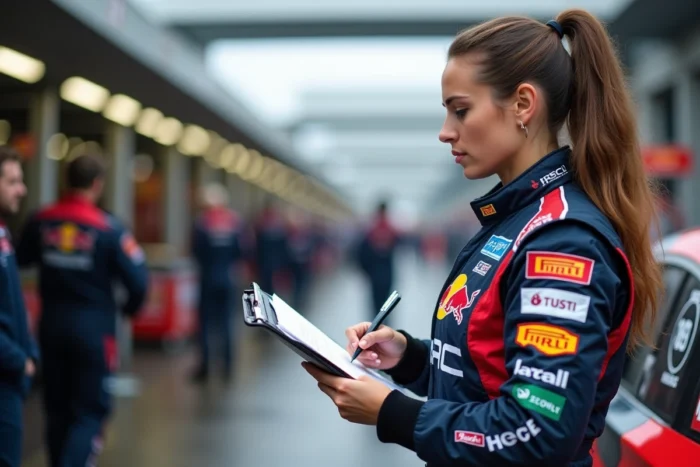
Laurène Godey did not arrive in Sébastien Loeb’s cockpit by chance. A double French women’s rally champion, she combines co-driving and driving experience that gives her a technical reading of the stages well beyond the role of a note reader. Their duo, forged on the Swiss and Vosges roads, redefines how a crew can function when both occupants share a high-level competitive culture.
Alpine A110 GT+ against Rally2: an atypical chassis choice in national rally
Aligning an Alpine A110 GT+ against Rally2 on Swiss championship stages is a bold technical bet. The GT+ is a rear mid-engine, rear-wheel drive car designed for the road, then adapted for competition by the GL team. The Rally2 cars, with all-wheel drive and long-travel suspensions, have dominated national rankings for years.
The Rallye du Chablais confirmed that this choice was not a whim. On stages described by Loeb as contested “in quite Dantean conditions,” the A110 outpaced the entire Rally2 field. The mid-engine layout offers a natural balance in corners that the Rally2 compensate for with traction. In wet conditions, this weight distribution advantage becomes a true differentiating factor.
The previous year, the same chassis had already won the Rallye Mont-Blanc Morzine. Here we observe a constant: the Loeb-Godey duo exploits the specificities of the GT+ where other crews might be tempted to demand a more conventional tool. Exploring the journey of Laurène Godey and Sébastien Loeb helps to understand how this technical complementarity has been built over their engagements.
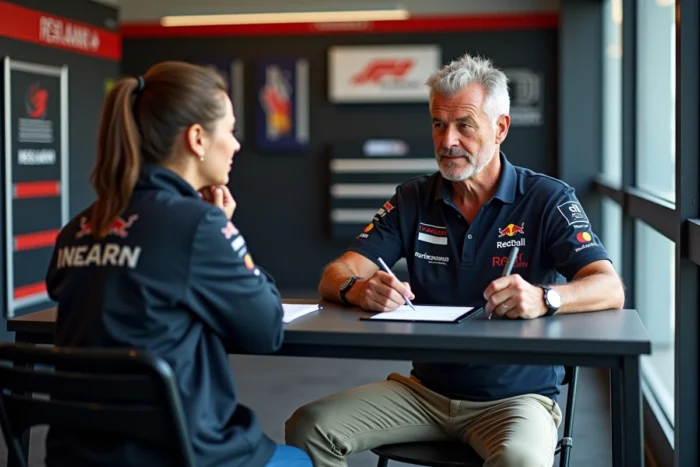
Laurène Godey, initiator of Loeb’s French rally program
A detail goes unnoticed in mainstream media coverage: it was Laurène Godey who convinced Sébastien Loeb to participate in the Rallye Vosges Grand Est. Originally from the Vosges, she knows the roads, the profiles of the stages, and the local weather conditions. This is not a sentimental whim; it is a sporting argument.
The result validated the intuition. At the wheel of a 2017 Ford Fiesta WRC during the 41st edition of the Rallye Vosges Grand Est, Loeb and Godey won all the contested stages. The 2017 Fiesta WRC, a generation of car that many consider the most spectacular of the modern WRC era, returned to the Vosges ground with a crew capable of maximizing its potential.
We observe here a pattern that goes beyond the simple dynamic of a media-highlighted couple. Godey drives engagement choices, assesses opportunities, and brings field knowledge that complements Loeb’s raw speed. The usual reading (him driving, her accompanying) does not hold up against the facts.
Double role: driver and co-driver
Laurène Godey has her own titles in women’s rallying. This dual skill radically changes the dynamic of the right seat. A co-driver who knows how to drive anticipates the chassis’s reactions, adjusts the timing of the notes according to the actual speed, and manages emergency situations with a technical calm that a non-driving co-driver cannot always replicate.
In practical terms, this translates to a fluidity of communication in the cabin. The notes are not simply read; they are interpreted based on perceived grip, rear-end behavior, and the margin available before understeering. This is a measurable competitive advantage on long and tricky stages.
Multi-discipline program: from Dakar to regional rallies
Sébastien Loeb is switching between disciplines at a pace that few drivers of his age maintain. A few days before the Chablais, he finished second in the South African Safari Rally driving a Dacia Sandrider. Transitioning from an African raid to timed stages on Swiss asphalt in just a few days requires an extraordinary physiological and technical adaptability.
Godey’s role here takes on a logistical and mental dimension often underestimated. Preparing the notes for a Swiss rally while the driver is still on South African tracks requires complete work autonomy. Reconnaissances, note handwriting, identifying risk areas: everything relies on the co-driver in advance.
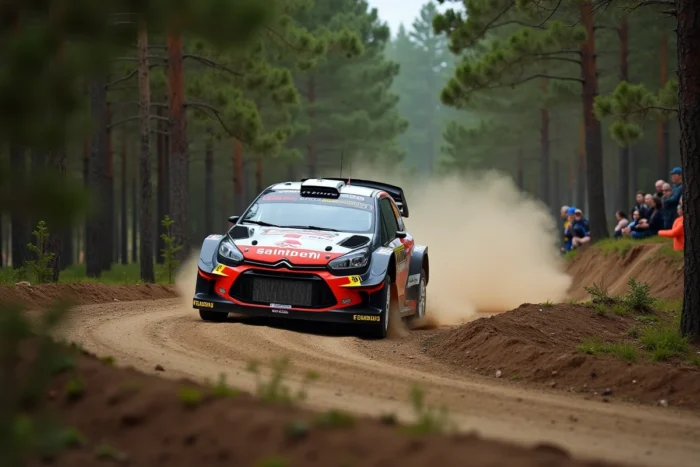
- Rallye du Chablais (Switzerland): victory in Alpine A110 GT+, third success for Loeb in this event after previous wins
- Rallye Mont-Blanc Morzine: victory the previous season with the same Alpine chassis
- Rallye Vosges Grand Est: total domination in Ford Fiesta WRC 2017, winning all stages
- Rally-Raid Safari of South Africa: second place in Dacia Sandrider, just before the Chablais
This calendar versatility is not trivial. Each discipline imposes different mental adjustments. The raid is run on management, navigation, and endurance. The asphalt rally demands constant attack, stage after stage. Loeb transitions from one to the other without visible latency, and Godey adapts to each configuration with the same rigor.
GL team and technical preparation of the Alpine A110
The GL team handles the preparation of the Alpine A110 GT+ entered by the duo. This tuning work goes far beyond simple homologation. Adapting a production sports car to timed stages involves revising the engine mapping, shock absorber settings, front suspension geometry, and braking system to withstand repeated stresses on varied surfaces.
The fact that the A110 GT+ has beaten Rally2 cars, which are specifically designed for competition, indicates a particularly advanced level of mechanical preparation. The GL team does not benefit from factory budgets but compensates with in-depth knowledge of the Alpine chassis and the accumulated feedback from several rallies with Loeb and Godey.
The duo does not simply drive what they are given. Godey’s feedback on corner behavior, combined with Loeb’s sensitivity to the chassis, fuels a continuous improvement cycle between each event. This expanded teamwork—driver, co-driver, and preparer—produces results that Loeb’s speed alone would not suffice to explain.