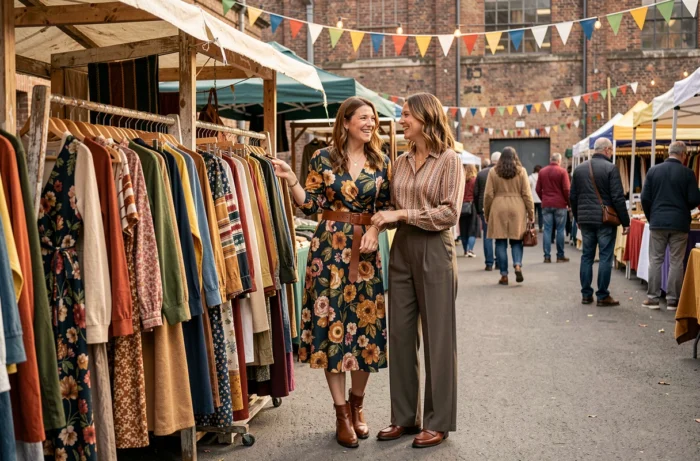
The circular fashion market (resale, rental, repair, upcycling) is valued at over 6 billion euros in France, with an annual growth rate of nearly 12% projected until 2030. This figure changes the very definition of fashion shopping: a unique style this season is no longer built solely in stores, but also through second-hand, occasional rental, or transformation of existing pieces.
Extended Producer Responsibility: What Textile Regulation Changes for Shopping
The revision of the Waste Framework Directive, which comes into effect on October 16, 2025, makes Extended Producer Responsibility (EPR) mandatory for textiles and footwear in all EU member states. Brands must now pay eco-modulation fees calculated based on the sustainability and recyclability of their products.
EPR schemes must be fully operational by April 2028 at the latest. The Regulation on the Ecodesign of Sustainable Products (ESPR), adopted in July 2024, also prohibits the destruction of unsold clothing.
For buyers, the consequence is direct: pieces designed with sustainable and recyclable materials will gradually be favored by brands, as they incur lower eco-contributions. Seeking a unique style this season also means understanding that prices will increasingly reflect the actual sustainability of the garment. Collections made from hard-to-recycle materials are likely to see their costs rise, while natural fibers and mono-material textiles will become more competitive.
Exploring Fashion Pulse’s shopping universe, we see that this logic is already influencing the selection of pieces offered by certain platforms, which prioritize brands committed to traceability.

Autumn Shopping Trends: The Pieces That Make Up a Sustainable Wardrobe
Current fashion trends are better understood when filtered by their ability to last beyond a season. Three categories of clothing stand out for building a personal style without renewing your wardrobe every three months.
The Oversized Blazer and Structured Cuts
The oversized blazer remains a formidable transitional piece between summer and autumn. Its cut allows for layering without adding bulk to the silhouette. Worn over a t-shirt or a linen shirt, it adapts to the temperature variations of September and October.
A blazer made of blended wool or thick cotton can last through several seasons without losing its shape. This is exactly the type of piece that EPR regulation makes economically more attractive for brands, and therefore more accessible in the long run.
Accessories as Markers of Unique Style
Investing in accessories to differentiate a look remains the most economical method. A structured bag, a leather belt, or a printed scarf can transform a basic outfit into an identifiable silhouette.
- Vegetable-tanned leather bags are gaining ground in autumn collections, driven by the demand for traceable materials and the environmental labeling set to launch in October 2026.
- Jewelry made from recycled metal or natural stones allows for varied looks without multiplying textile purchases.
- Interchangeable or repairable sole shoes are starting to appear from several European brands, a direct sign of the influence of the ESPR regulation on product design.
Circular Fashion and Second-Hand: A Concrete Lever for Personal Style
Second-hand is no longer a compromise. Oxfam published a report in September 2026 warning that not all second-hand clothing is necessarily virtuous, and that one must know how to sort. This realization pushes buyers to become more selective, which is exactly what a unique style needs.
Buying second-hand with a textile quality criterion (condition of seams, fabric composition, brand origin) allows for acquiring pieces that few people will wear in the same city. This is the opposite of fast fashion, where thousands of identical items circulate simultaneously.
Clothing rental is also on the rise. For pieces worn once or twice a year (evening wear, very formal coat), renting avoids impulsive purchases and frees up budget for higher-quality basics.
Textile Environmental Labeling: Reading Labels Differently This Autumn
An environmental labeling system for textiles is being prepared in France, with a deadline set for October 2026. This system will assign a visible score to garments, comparable to the food Nutri-Score, incorporating carbon impact, water consumption, and recyclability.
For consumers, this means a new comparison tool at the time of purchase. Environmental labeling will transform shopping into an act of reading, not just a visual crush. Two t-shirts at the same price may display very different scores depending on their place of manufacture and composition.
The new European rules against greenwashing, strengthened since August 2026 by Oeko-Tex certifications and requirements for substantiating ecological claims, complement this system. A brand that claims to be “eco-responsible” without verifiable proof is subject to sanctions.
- Checking the exact composition of the fabric (percentage of each fiber) before buying allows for anticipating the actual durability of the garment.
- Favoring mono-materials (100% cotton, 100% linen) facilitates future recycling and aligns with the criteria favored by EPR eco-modulations.
- Beware of synthetic blends with a low percentage of natural fiber, often more difficult to recycle and potentially penalized by future labeling.
This season’s shopping trends are not just about a color palette or a cut of jeans. The European regulatory framework, the rise of selective second-hand, and the imminent arrival of environmental labeling are reshaping how we choose a garment. A unique style is now built as much by what we know as by what we wear.