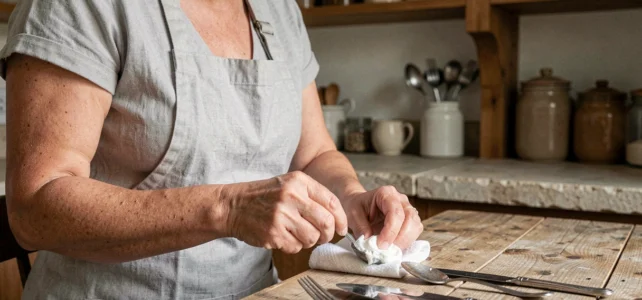
An overlooked silver bracelet left in a jewelry box for a few weeks often comes out covered in a dark film. This darkening is not dirt; it is a chemical reaction between silver and sulfur present in the ambient air, sweat, or certain cosmetics. This is known as silver sulfide, a layer that thickens over time and eventually dulls the surface completely.
The good news is that we can reverse the process using common ingredients. However, not all techniques are equal, and some can damage more than they clean.
Calcium Carbonate: The Gentle Abrasive Approved by Conservators
Most articles recommend baking soda or toothpaste for scrubbing tarnished silver. We have tested them, and they work, but conservation specialists (notably the Canadian Conservation Institute) point towards a product less known to the general public: precipitated calcium carbonate.
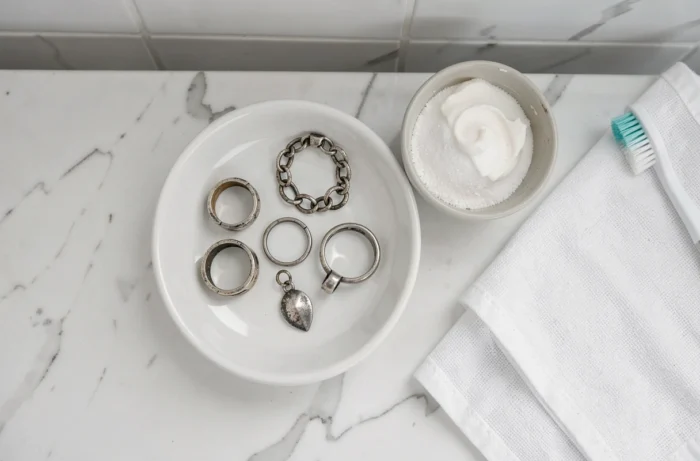
This compound, used in the form of a paste mixed with distilled water, offers a significantly more controlled abrasive power than free-flowing baking soda. The grain is finer and more uniform, which limits the micro-scratches visible to the naked eye on polished surfaces. On a smooth piece of jewelry like a chain or a solid silver bracelet, the difference is noticeable.
Calcium carbonate can be found at pharmacies or drugstores, often packaged in powder form. Just mix a small amount with a few drops of water to form a paste, then gently rub with a soft cotton cloth. Rinse with clear water and dry immediately. If you’re looking for methods to clean tarnished silver that respect the material in the long term, this type of abrasive should be prioritized.
Electrolytic Reaction with Aluminum and Salt: Principle and Limitations
This technique is widely circulated and is based on a simple principle. You line the bottom of a container with aluminum foil, pour in hot water with a tablespoon of salt (or baking soda), and then place the tarnished silver items so that they touch the aluminum.
The electrochemical reaction transfers sulfur from the silver to the aluminum. In just a few minutes, the black layer dissolves without any scrubbing. It’s spectacular on heavily tarnished silverware or cutlery.
When This Method Is Problematic
The process also removes intentional patina. On jewelry with deliberately oxidized silver (rings with dark reliefs, engraved pendants), all decorative contrast is lost.
Conservators of museums and antiques advise against this technique on old collectible pieces. The patina serves to authenticate and date an object. Removing it can decrease the value of an antique piece.
- Suitable for modern cutlery, trays, and jewelry without decorative patina
- To be avoided on antique objects, collectible pieces, and jewelry with oxidized finishes
- Only works if the silver physically touches the aluminum foil in the solution
White Vinegar and Lemon: Acidic Cleaning of Tarnished Silver
Diluted white vinegar in warm water remains a classic for cleaning everyday silverware. Objects are soaked for about twenty minutes, scrubbed with a soft brush (like a used toothbrush), then rinsed and dried.
Lemon juice works on the same acidic principle, with a slightly stronger effect. It can be applied pure on a cloth for the heavily tarnished areas of a bracelet or silver chain.
Feedback varies on this point: some jewelers find that prolonged acidity weakens fine soldering, while others have used it without issues for years. As a precaution, limit soaking time and rinse thoroughly.
Precaution with Jewelry Set with Pearls or Stones
Pearls, amber, coral, and certain porous stones cannot withstand acidity. If the jewelry has glued pearls or cabochons, avoid soaking altogether. Apply the product with a cotton swab, only on the metal parts.
Preventive Maintenance of Silver: Slowing Down Darkening
Cleaning is good, but reducing the frequency of cleaning protects the surface over time. Each abrasive pass, even gentle, removes a tiny layer of metal. Over decades, this becomes noticeable.
A few concrete habits can make a difference:
- Store silver jewelry in tarnish-resistant pouches (fabric impregnated with activated charcoal or sulfur-absorbing compounds), not in an open box
- Remove rings and bracelets before applying perfume, cream, or hand sanitizer, as these products accelerate oxidation
- Wipe worn jewelry with a dry cotton cloth before storing, to remove residual sweat
- Store table silverware in a dry place, individually wrapped in clean fabric
A regularly worn silver piece actually tarnishes less quickly than a piece forgotten in a drawer. The natural friction against the skin acts like a light, permanent polishing.
Antique Silver Pieces: Don’t Clean Without Thinking
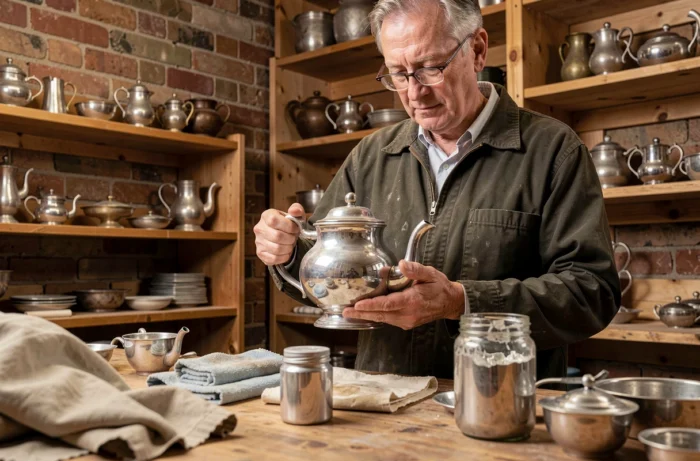
On an inherited tray or an old cup, the reflex to make everything shine can be costly. Institutions specializing in conservation recommend a minimalist and non-chemical cleaning for such pieces: a simple wipe with a dry cotton cloth, without water or products.
If the darkening is too advanced, it’s better to consult a conservator-restorer rather than improvise. A poorly calibrated treatment removes historical patina and leaves irreversible marks.
For everyday objects (recent jewelry, cutlery, frames), cleaning can be done without second thoughts. Calcium carbonate for delicate surfaces, the aluminum-salt method for heavily tarnished large pieces, white vinegar for regular maintenance: each technique has its place. The idea is to choose based on the object, not to apply the same recipe to everything.