Dehydrating apricots in a dehydrator seems simple: cut, lay down, wait. The difference between a soft, fragrant result and a moldy batch after two weeks lies in three parameters that are rarely measured together: drying temperature, total time, and the conditioning phase after drying. This article compares current practices and details the steps that can tip the result.
Apricot Dehydration Temperature: Old and New Recommendations
Tutorials published before recent years often advised dehydrating fruits between 40 and 50 °C. Recent technical guides now place the standard range for fruits between 52 and 57 °C. The difference is significant.
| Parameter | Old Practice (40-50 °C) | Updated Practice (52-57 °C) |
|---|---|---|
| Fermentation Risk | Higher (slow drying, prolonged moisture) | Reduced (faster moisture removal) |
| Mold Risk During Drying | Higher | Reduced |
| Final Texture | Soft, sometimes too moist in the center | Soft, fruit leather type |
| Aroma Preservation | Good if drying is controlled | Good, with less loss due to fermentation |
The shift to a slightly higher temperature aims for a specific goal: to limit the window during which bacteria and yeasts can develop in the moist flesh of the apricot. Conversely, exceeding 57 °C hardens the surface and traps moisture in the center, causing exactly the opposite problem.
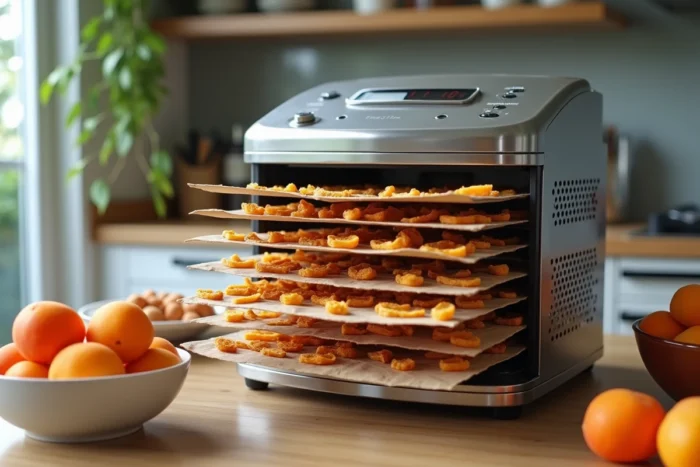
For those looking to understand how to dehydrate apricots in a dehydrator with consistent results, the 52-57 °C range is the most reliable starting point.
Washing and Preparing Apricots Before Drying
Most guides quickly gloss over washing. FDA recommendations are stricter: wash apricots under running water and then dry them thoroughly before placing them on the trays. Drying washed fruits (with a clean cloth or paper towel) reduces surface residues and the risk of mold during dehydration and storage.
An apricot placed still damp on a dehydrator tray takes longer to dry. The remaining wash water adds to the moisture in the flesh, which extends the total drying time and creates uneven drying areas on the same tray.
Cutting and Arranging on Trays
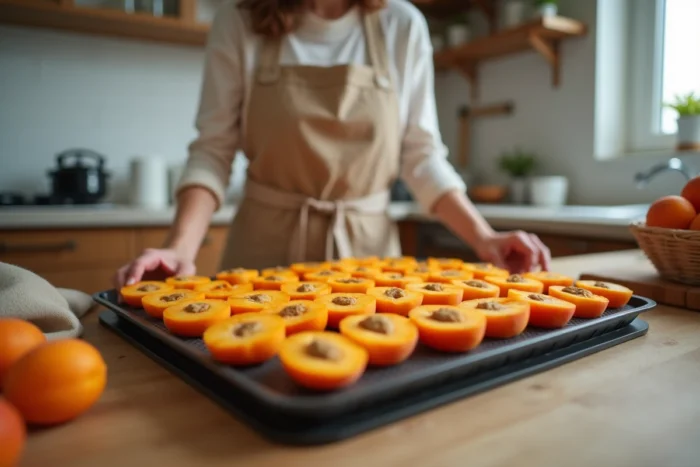
Cut the apricots in half, remove the pit, and then lay each half skin-side down. This position prevents juice from accumulating in the pit cavity, which would slow down drying.
- Space the halves at least one centimeter apart to allow air circulation between the pieces.
- Place the largest apricots on the bottom trays (or closest to the heat source depending on the dehydrator model).
- Rotate the trays halfway through to compensate for differences in airflow between levels.
Conditioning After Dehydration: The Step That Prevents Mold in Jars
This is the most neglected step. Removing apricots from the dehydrator and placing them directly into jars is a common mistake. Technical dehydration guides recommend a conditioning phase of several days before final storage.
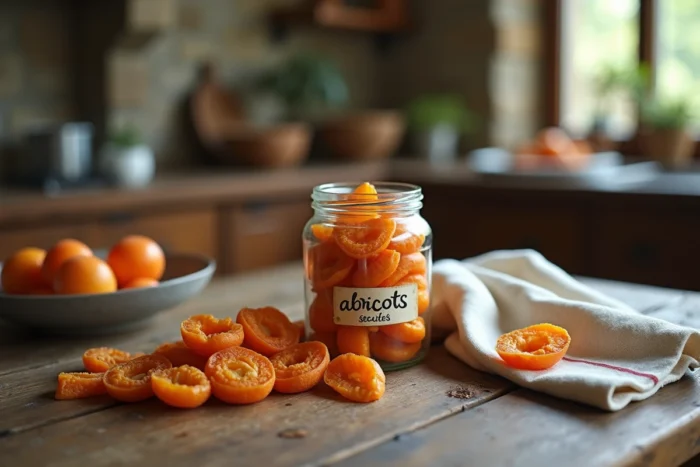
The principle: place the dried apricots in a rigid container (glass jar, airtight box) filled to a maximum of two-thirds. Shake the container daily during this period. The goal is to homogenize the residual moisture between the pieces.
How to Spot a Poorly Dried Batch
Two signals should alert you during the conditioning phase:
- Condensation appears on the walls of the container, indicating that some pieces still contain too much water.
- Some halves remain very soft, almost sticky, while others are firm.
In both cases, the entire batch must return to the dehydrator for an additional session. Storing a partially dried batch in a closed jar creates an ideal environment for mold.
Homemade Dried Apricots: Why Brown Color is Normal
Industrial dried apricots display a bright orange color. This hue is achieved through treatment with sulfur dioxide (sulfites). Homemade dehydrated apricots, without this treatment, naturally brown due to enzymatic oxidation.
This browning does not affect flavor or nutritional value. It simply indicates the absence of sulfites. Trying to replicate the orange color of industrial apricots at home would involve using additives that fall outside the scope of traditional home dehydration.
Long-Term Storage of Dried Apricots
Once the conditioning phase is validated (no condensation, uniform texture), storage can begin. The airtight glass jar remains the most suitable container. Keep it away from light and heat.
Vacuum sealing extends the shelf life by several months compared to a simple jar. If you have a sealing machine, this is the most effective option for storage that exceeds a few weeks.
The difference between a batch that stores well and a batch that molds rarely lies in the drying method itself. It almost always comes down to two upstream factors: insufficient drying (too low temperature or too short duration) and lack of conditioning before jar storage. By mastering these two parameters, home dehydrating of apricots produces a stable result without preservatives.