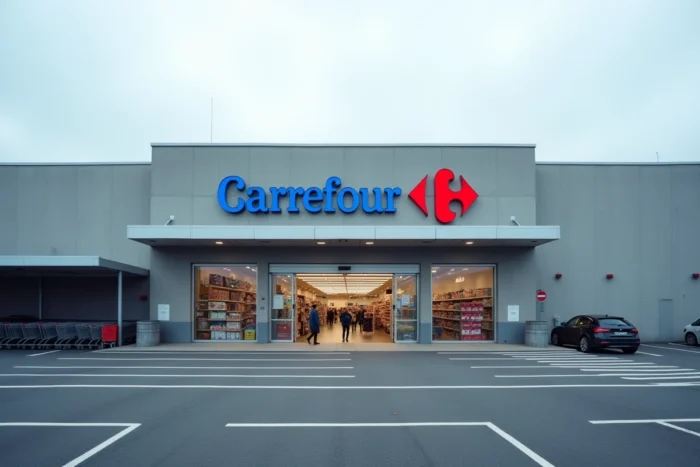
You pass by a Carrefour City every morning, you do your monthly shopping at a Carrefour hypermarket, and yet these two stores have almost nothing in common. The Carrefour group deploys a network of very different formats in France and around the world, each designed for a specific use. Understanding these distinctions allows you to choose the right store based on what you are looking for, whether it’s a full family grocery haul or a quick stop for essentials.
Why Carrefour Adapts Each Brand to a Shopping Moment
The group’s logic is not based on the size of stores for the sake of it. It starts from a simple observation: the same customer shops differently depending on the day and time. On Saturday mornings, they fill a cart. On Tuesday evenings, they grab a prepared meal on their way home from work. These two situations call for two distinct formats, with assortments, sizes, and prices calibrated differently.
This multi-format approach structures the entire strategy of the group. Under the leadership of Alexandre Bompard, whose CEO mandate has been extended until 2029, Carrefour is also accelerating its efforts in artificial intelligence applied to retail. The goal: to personalize promotions and optimize assortments in each type of store. In other words, a hypermarket and a convenience store of the same group do not offer the same deals, even on identical products.
To better understand the different brands of the Carrefour group, one must first understand what separates them in terms of size, number of references, and target clientele.
Carrefour Hypermarket and Carrefour Market: Two Opposing Shopping Logics
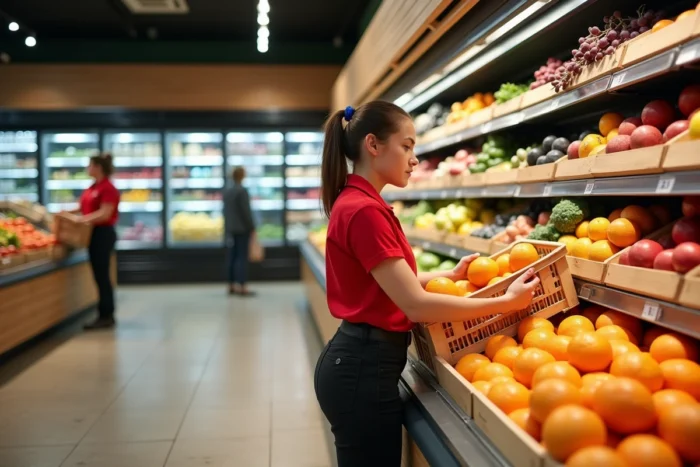
The Carrefour hypermarket remains the flagship of the group. It is the oldest format, meant for large shopping trips. It offers several tens of thousands of references, from food to appliances, including textiles and gardening. The hypermarket targets weekly or monthly full shopping, with volume promotions and often an integrated drive.
Carrefour Market, the group’s supermarket, occupies a different niche. Its size is significantly smaller, and its references focus on food, fresh products, and everyday items. The Market is located in medium city centers or peri-urban towns, where a hypermarket would be oversized.
Have you noticed that prices are not exactly the same between a hypermarket and a Market for the same product? That’s normal. Operating costs differ (rent, size, staff), and the more limited assortment of the Market does not generate the same volume effects. The choice between the two therefore depends on your shopping frequency and what you put in your cart.
Carrefour Proximity Brands: City, Express, and Contact
It is in the proximity segment that the group multiplies its variations. Three brands coexist, and their differences deserve to be detailed.
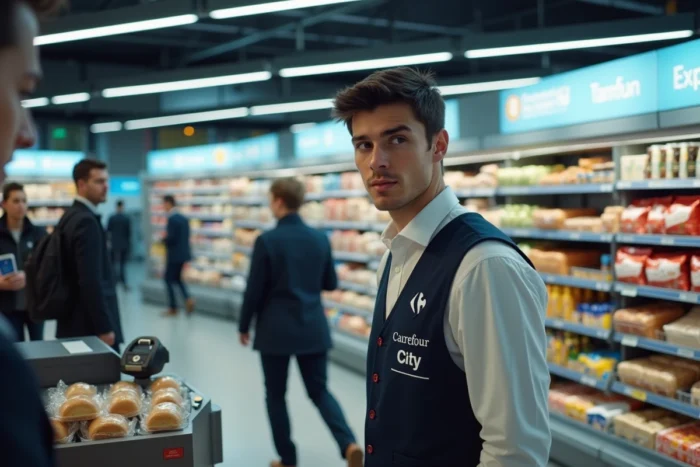
- Carrefour City targets dense urban areas, often at the foot of buildings. Compact size, extended hours (sometimes until 10 PM or 11 PM), assortment focused on snacking, fresh products, and quick stops. It is the format for the home-work commute.
- Carrefour Express is even smaller. It resembles a neighborhood convenience store with a very limited number of references. Its role: to cover an immediate need within a few minutes’ walk.
- Carrefour Contact positions itself in rural or semi-rural areas. It serves as a proximity supermarket where large stores are far away. Its range is broader than that of a City, with more fresh products and traditional departments (butchery, cheese).
A often overlooked point: many Contact and Express stores are managed by franchisees. This means that the assortment and prices can vary from one store to another, even under the same brand. The franchisee adapts their offer to the local clientele, which creates sometimes significant discrepancies.
Promocash and the Specialized Formats of the Carrefour Group
Beyond the mainstream stores, Carrefour also operates in less visible segments. Promocash, the group’s cash and carry brand, caters to professionals in the restaurant and food trade. The principle: large volumes, packaging suited for professionals, and wholesale prices. This format is on the rise, driven by the demand from restaurateurs and small retailers looking to control their supply costs.
The group is also expanding into ancillary activities that are not stores in the traditional sense:
- Carrefour Voyages offers trips and tours through an online platform and corners in hypermarkets.
- Carrefour Banque (now Carrefour Assurance for certain products) provides financial services related to the loyalty card and consumer credit.
- Potager City, acquired by the group, delivers baskets of fresh fruits and vegetables, often through short supply chains. It represents Carrefour’s entry into direct delivery of fresh products.
These activities do not represent the core of the revenue, but they contribute to the omnichannel ecosystem that the group is building. The goal is for a customer to remain within the Carrefour universe regardless of their need, from groceries to travel.
Omnichannel Strategy and AI: What Connects All Carrefour Brands
What distinguishes Carrefour from its competitors in managing its formats is the clear intention to connect all its stores to a single digital ecosystem. The group operates an e-commerce site for each country, drives linked to hypermarkets and supermarkets, and home delivery options.
AI serves as a link between physical formats and digital. Carrefour uses it to adjust assortments according to the catchment area, personalize promotions through the loyalty card, and optimize the supply chain. Alexandre Bompard has publicly stated that, regarding AI, “Europe must behave like an emerging country,” signaling a desire for massive investment in this area.
For the customer, this translates into a smoother experience across channels. Ordering online from a City, picking up at a drive in a Market, or having items delivered from a hyper warehouse: these connections between brands are the true thread of the group’s strategy, far beyond the simple question of store size.