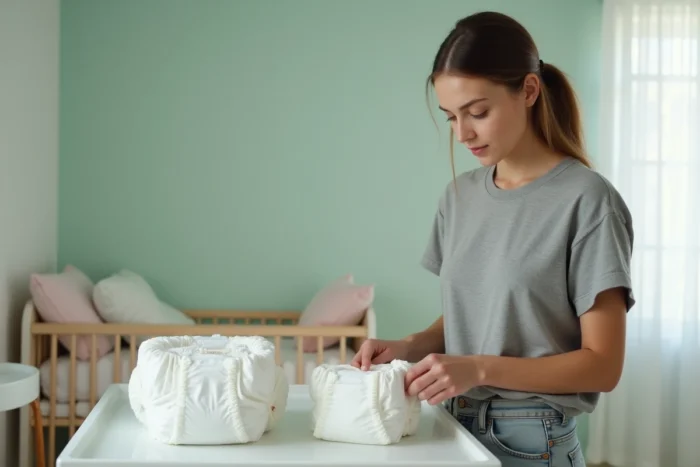
When you open a pack of Pampers diapers for the first time after using another brand, the texture of the inner layer is immediately noticeable to the touch. Softer, smoother, sometimes thinner as well. This tactile sensation sums up the topic well: the differences between Pampers diapers and their alternatives are not based on a single criterion, but on a set of technical details that the packaging rarely summarizes.
Petrolatum and latex in diapers: two markers to check in the composition
Before comparing the ranges with each other, it saves time to look at two specific ingredients. Petrolatum and latex frequently appear in alerts from early childhood professionals. Petrolatum can reduce the breathability of the layer in contact with the skin, while latex is a possible factor for irritation in sensitive babies.
Not all Pampers ranges are equal in this regard. The Harmonie range, positioned in the “clean” segment, features a composition without fragrance and highlights the absence of certain substances. The classic ranges (Baby-Dry, Premium Protection) do not offer the same guarantees in terms of composition. The difference in Pampers diapers according to Dr. Hackney is detailed range by range, which helps to target the right reference rather than reasoning by brand.
On the alternatives side, several store or eco-friendly brands circumvent the problem by having their contact layer certified by a third-party label. The OEKO-TEX certification on the inner layer guarantees the absence of certain regulated substances at the European level, providing an objective comparison criterion against Pampers Harmonie.
Absorption and leaks at night: Pampers Baby-Dry vs. eco-friendly diapers
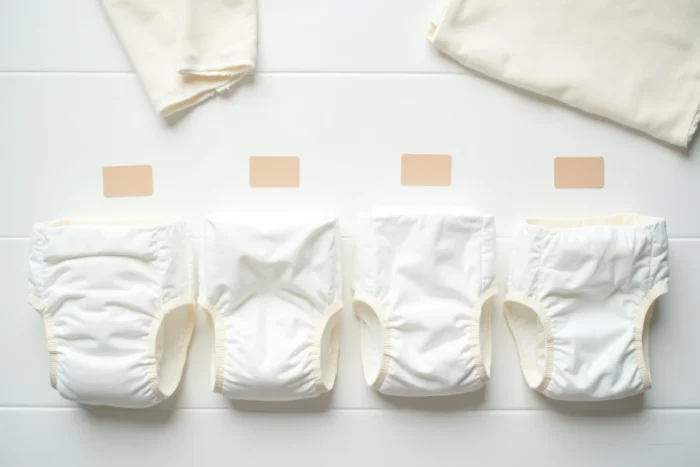
We often notice it upon waking: the diaper has held up or it has not. Nighttime absorption remains the most discriminating test between brands. Pampers Baby-Dry uses absorbent microbeads that capture moisture and turn it into gel. The result is a diaper that remains relatively dry to the touch even after a full night.
Eco-friendly alternatives sometimes prioritize materials made from cellulose or starch, with acceptable absorption capacity during the day but showing limitations over long periods. Feedback varies on this point: some parents report no leaks with brands like Lillydoo or Love & Green, while others need to switch to a larger size at night to compensate.
Pampers also offers “+” sizes (Baby-Dry Night Pants, for example) that maintain the same cut but increase absorption capacity. This option is not available with all competing brands, which forces parents to juggle between two different references for day and night.
Composition of Pampers Harmonie vs. certified brands
The Harmonie range is Pampers’ response to eco-friendly brands. It targets parents who want to stick with a well-known brand while reducing exposure to controversial substances. The positioning is clear: no fragrance, certified cotton on the layer, recyclable packaging.
The problem is that the term “eco-friendly” does not rely on any unique regulatory definition for disposable diapers. A diaper can be called eco-friendly because it uses bio-based plastic, because it is bleached without elemental chlorine, or because its packaging is made of cardboard. These criteria are not equivalent in terms of impact on a baby’s skin.
To compare objectively, we can rely on three concrete benchmarks:
- The presence of a textile certification (OEKO-TEX Standard 100, for example) on the layer in contact with the skin, which attests to testing for regulated substances
- The absence of added fragrance and lotion, often sources of contact allergens in infants
- The explicit mention “without petrolatum, without latex” in the list of components, and not just in the marketing discourse
Pampers Harmonie checks some of these boxes. Some store brands (like “Ecoplus” ranges) check all of them at a lower price point.
Price of Pampers diapers compared to alternatives: where does the difference lie
The diaper budget in the early years represents a significant expense. The price per change varies considerably from one Pampers range to another and from one brand to another. Pampers Premium Protection costs significantly more than Baby-Dry, which itself remains above most store brands.
A high price does not guarantee better composition or better absorption. Que Choisir confirms this in its analyses: the relationship between cost and actual performance is not linear. Some diapers sold for half the price achieve comparable results in absorption and retention.
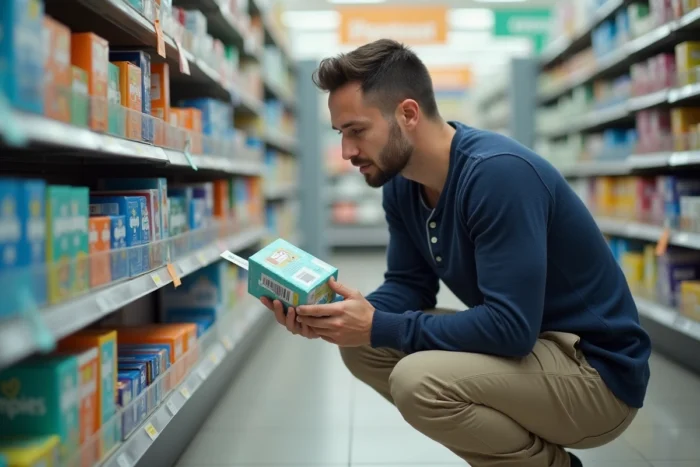
Online subscriptions (Pampers or independent brands like Joone, Lillydoo) allow for reduced unit costs and help avoid stock shortages. The price gap then narrows, but the convenience has a logistical cost that each household evaluates differently.
Monitoring of disposable diapers in France: what ANSES imposes on manufacturers
Since 2019, ANSES has implemented a continuous monitoring of disposable diapers sold in France. Its latest update, dated 2023, indicates that manufacturers, including Pampers, have generally reduced concerning substances: dioxins, furans, PAHs, allergenic fragrances. Authorities maintain heightened vigilance and may require additional reformulations in case of new alerts.
This regulatory pressure has pushed the entire market upward. The gaps in composition between Pampers and its competitors have narrowed in recent years, making comparisons more nuanced than five years ago. The choice now hinges on details: type of layer, presence or absence of lotion, third-party certifications, and of course, the fit that suits each baby’s morphology.
Rather than seeking the “best” diaper in absolute terms, it is advisable to test two or three references for a week each, monitoring for redness, leaks, and comfort of movement. This is the only reliable protocol, as no ranking can predict how an infant’s skin will react to a particular layer.