
We declare a change in situation, we send a supporting document, the status changes to “file processed” in the Caf space, and yet nothing appears in the account. This gap between administrative processing and the actual payment of benefits leads to thousands of questions each month. Understanding what happens between these two steps allows us to anticipate blockages and act at the right time.
File processed by the Caf: what this status really means for payment
When the personal space displays “file processed,” the Caf has completed the review. It has checked the documents, recalculated the rights, and validated the amount. This status does not mean that the transfer has been made.
Payments follow a fixed monthly schedule, usually around the 5th of the following month. If the file is processed on the 20th of the month, the payment will only be issued at the next due date. Therefore, we end up with a payment delay after Caf processing that has nothing to do with a malfunction: it is the normal operation of the accounting circuit.
The delay in displaying on the bank account can be up to three days after the transfer order issued by the Caf. According to the Caf of La Réunion, the Caf payment date and the actual availability date in the account are two distinct things. With certain online banks or institutions that process transfers in batches, this delay can be extended even further.
Missing documents and incomplete file: the most common cause of blockage
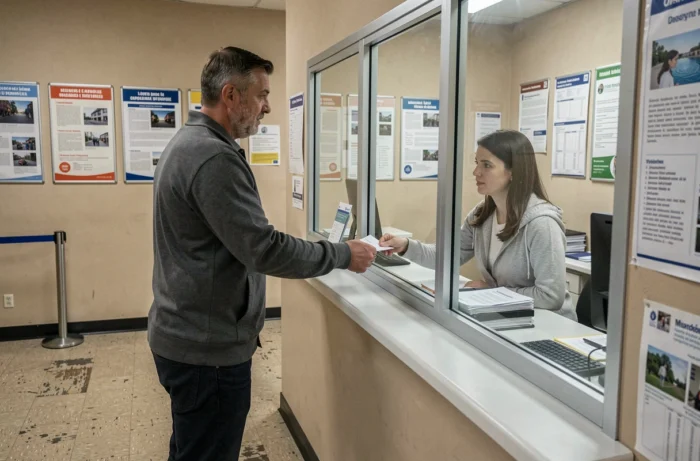
The Caf is often accused of slowness, but in many cases, the file is simply incomplete. The Caf of Vienne reminds us that payment can be interrupted as long as certain supporting documents are missing, whether it’s a declaration of resources, a pension certificate, or an identity document.
The problem: the notification of missing documents sometimes arrives in the personal space without the beneficiary noticing it. A paper letter can also get lost. The file then remains “under review” for weeks without anyone understanding why.
To quickly lift this type of blockage, one can follow this verification:
- Log into the “My Account” space and check the “My letters” section to spot any pending request for supporting documents
- Ensure that the last quarterly declaration of resources (DTR) has been submitted, as an omission automatically suspends the payment of RSA or the activity bonus
- Check that the registered bank account details are still valid, especially after a bank change
If all the documents are present and the status does not change, contacting the Caf by phone or via secure messaging remains the only concrete lever.
Average processing times by Caf for different types of aid: RSA, APL, AAH
Processing times vary depending on the type of aid requested. The Caf now publishes average indicators calculated over the last thirty days, by department. These times are indicative and vary according to local workload, as specified by the Caf of Haute-Garonne.
In practice, significant discrepancies are observed:
- Housing aid (APL, ALS, ALF) generally has a faster processing time when it comes to a renewal, but a first request takes longer as it requires verification of the lease and resources
- RSA and the activity bonus heavily depend on the regularity of quarterly declarations: a delay in DTR blocks all calculations
- AAH involves a longer process since the MDPH must first validate the disability rate before the Caf proceeds with the payment, which extends the review period by several weeks
Feedback on this point varies by department. Some Cafs process first requests in a few days, while others take several weeks. Checking the “Processing times” page of one’s departmental Caf provides a more reliable estimate than a national figure.
The specific case of regularization after control
After a Caf control (on-site or document-based), a regularization phase begins. The Caf recalculates the rights for the verified period. If the result is an overpayment, a notification letter arrives with the repayment terms. If it is a reminder in favor of the beneficiary, the payment of the reminder follows the next payment schedule.
The delay between the end of the control and the notification depends on the complexity of the file. For a simple control regarding a declaration of resources, regularization can occur within a few weeks. For a file involving a change in family situation with recalculation over several months, processing takes longer.
What to do concretely when the Caf payment does not arrive
The classic reflex is to repeatedly call the Caf. Before reaching that point, a few targeted steps can save time.
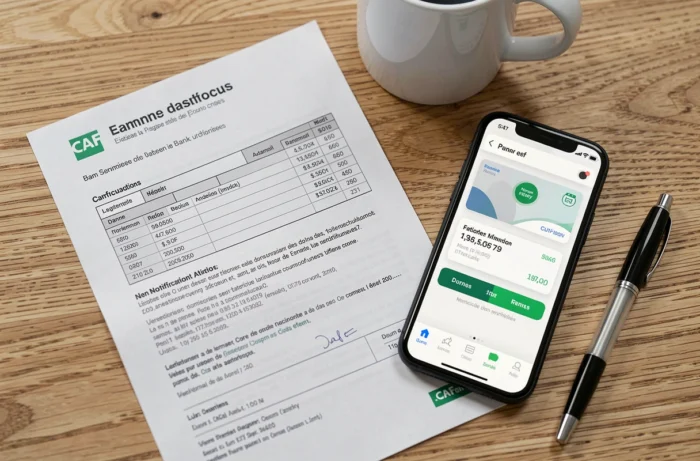
First, check the “My payments” section in the personal space. If an amount appears with a date, the transfer has been issued, and the search should be on the bank’s side. A Caf transfer issued on a Friday may not appear until the following Tuesday.
Next, if no payment is displayed, open “My procedures” to check that no action is pending. An unreported change in situation (move, birth, separation) can suspend all benefits until the file is updated.
Finally, if everything seems in order and the payment has been missing for more than a month, the secure messaging of the Caf account generates a written follow-up. This is preferable to a phone call to keep a record of the request, especially in case of a later claim.
The Caf’s silence beyond two months on a request constitutes an implicit rejection decision, which then opens the right to appeal to the amicable appeal commission. This point is often overlooked, yet it constitutes a concrete lever to unblock a stalled file.