Washing multiple aprons at the same time in a machine almost systematically results in a tangle of knotted ties, twisted cords, and wrinkled fabrics that require intensive ironing. The question then arises: which methods actually reduce tangling, and which are merely common sense with no measurable effect on the final result?
Comparison of Anti-Tangling Techniques for Machine-Washable Aprons
Not all methods are equal. The table below compares the most common approaches based on their effectiveness against tangling, practicality, and impact on the cleanliness of the apron.
| Technique | Anti-Tangling Effectiveness | Practicality | Impact on Washing |
|---|---|---|---|
| Tying the cords together before washing | Average | Quick | Risk of tight knot that is difficult to undo |
| Individual washing bag for each apron | High | Requires as many bags as aprons | Slight hindrance to stain removal |
| Cords folded and secured with snap or pin | High | Time-consuming, especially in bulk | No negative impact |
| Aprons washed alone (without other laundry) | Low to average | Very simple | Good, but does not solve tangling between aprons |
| Turning the apron inside out | Low | Quick | Protects patterns or embroidery |
The washing bag and securing the cords stand out clearly. In contrast, simply tying the cords together, often recommended online, creates a compact knot that the spin cycle tightens to the point of complicating untying.
To delve deeper into these methods with concrete illustrations, several practical tips on MYN Idee detail each preparation step before the machine.
Securing the Cords Before Washing: The Method That Changes the Outcome
Tangling almost always comes from the cords. A standard kitchen apron has two to four ties that, free in the drum, wrap around other pieces of laundry or knot together during the spin cycle.
Folding and Securing the Cords
The most reliable technique is to fold each cord onto itself and secure it against the body of the apron. A safety pin, a wide elastic band, or a permanently sewn snap is sufficient. The cord no longer floats in the drum, eliminating the main cause of tangling.
This method takes one to two minutes per apron. For home use, this is negligible. In a professional context (restaurant, bakery), where sometimes a dozen aprons are washed per day, the preparation time accumulates. This is where the washing bag becomes more relevant.
Washing Bag: The Compromise for Batches
Placing each apron in a individual zippered washing bag physically prevents the cords from interacting with the rest of the load. The fabric remains in contact with water and detergent, but the movement of the ties is contained.
- Choose a bag that is larger than the apron folded in half, so that the fabric is not compressed and water circulates properly
- Close the zipper of the bag all the way; otherwise, the apron slips out of the bag during the spin cycle
- Wash the bags themselves regularly, as cooking grease residues accumulate and eventually stain clean laundry
Cotton, Linen, or Leather Aprons: The Fabric Affects the Washing Method
The material of the apron determines the temperature, cycle, and stain treatment before washing. A thick cotton apron can withstand a normal cycle at moderate temperature, while a linen apron requires a delicate program to limit wrinkling.
Cotton and Synthetic Blends
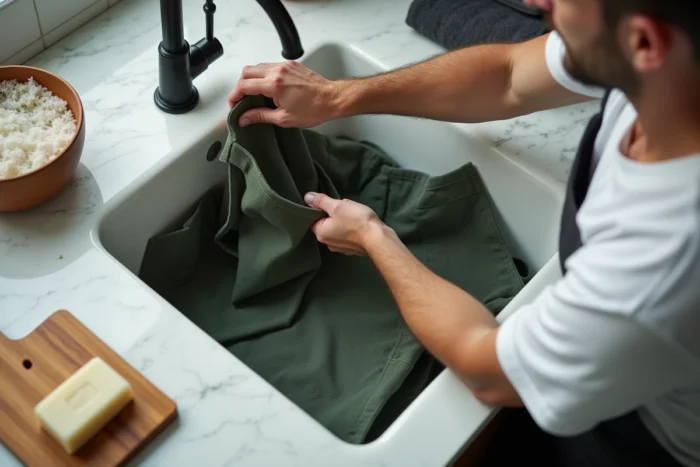
Cotton makes up the vast majority of domestic and professional kitchen aprons. It tolerates machine washing and standard detergents well. For ingrained grease stains, a pre-treatment with Marseille soap (rubbing the stain with slightly dampened soap, letting it sit for an hour) is more effective than simply washing in the machine.
Baking soda, added at half the dosage of detergent, enhances the degreasing action without damaging the fibers. This combination works particularly well on food grease stains that resist the standard cycle.
Leather or Oilcloth Aprons
Leather should not be machine washed. Wiping with warm water and a soft cloth is sufficient for regular maintenance. For stubborn stains, a specific leather soap prevents drying out the material. Therefore, the issue of tangling does not arise for these models, but their maintenance is more demanding than that of a fabric apron.
Embroidered or Personalized Aprons: Wash Resistance Depending on the Marking Technique
Aprons with a logo, name, or decorative pattern do not all react the same way to repeated washings. Embroidery withstands machine cycles better than thermal transfer printing, but it requires avoiding high temperatures that deform the fabric around the pattern.
Screen-printed or transfer prints begin to crack after several dozen washes, especially if the apron goes in the dryer. Turning the apron inside out before placing it in the washing bag protects the pattern from direct friction against the drum.
Washing Frequency and Requirements in Professional Catering
In a domestic context, a kitchen apron is washed after each use involving grease or sauce splatters, and at least once a week in case of light daily use.
In catering, the requirements go further. Good hygiene practice guides stipulate that washing frequencies must be integrated into the establishment’s HACCP system, with written traceability of laundry cleaning procedures. Washing temperatures, products used, and frequencies must be documented and reviewed during each audit or regulatory change.
This traceability requirement drives many restaurateurs to outsource the washing of professional laundry to industrial laundries, which eliminates the tangling issue but represents a recurring cost.
The most determining factor remains the preparation before the machine. An apron with properly secured cords, placed in a bag suitable for its size, comes out of the cycle without knots and with minimal wrinkling. The rest, delicate or normal cycle, low or moderate temperature, mainly depends on the fabric and the care label sewn inside.