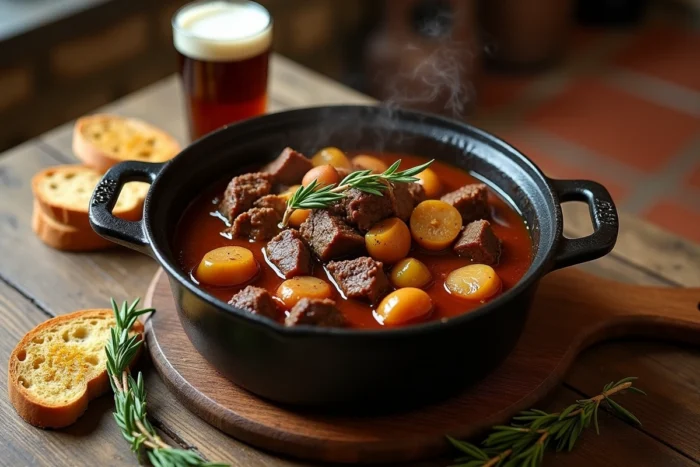
The Flemish carbonnade ch’ti relies on a precise technical triptych: the choice of beef cut, the type of beer, and the management of long cooking. Failing any of these three parameters results in a bland dish or dry meat, regardless of the care taken with the rest.
Beef Cuts and Preparation for Flemish Carbonnade
The chuck and the flank are the cuts that yield the best results in carbonnade. Their collagen structure gradually melts during cooking, producing that characteristic melting texture of the dish.
We recommend cutting the meat into thick slices rather than cubes. Flat pieces two to three centimeters thick absorb the sauce better and stack in the pot in alternating layers with the onions. This layered arrangement is a traditional method from the North that promotes even soaking.
The shoulder clod is also suitable, but its texture remains slightly firmer than that of the chuck after long cooking. Cuts sold under the generic name “bourguignon” should be avoided: their variable muscular origin leads to uneven cooking, with some pieces breaking down while others remain tough.
Before searing the meat, it must be patted dry thoroughly. A wet surface does not caramelize; it steams. This Maillard deficiency deprives the sauce of that brown depth that distinguishes a successful carbonnade from a simple stew. If you’re looking for the recipe for Flemish carbonnade ch’ti with a detailed step-by-step guide, the high-heat searing in small batches is consistently mentioned as a non-negotiable step.
Beer and Brown Sugar: The Acid-Sweet Pairing of the Sauce
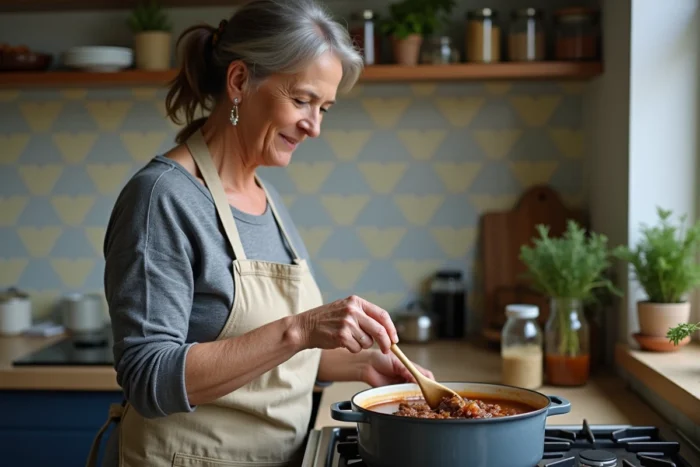
The dark or amber beer from the North serves as the main cooking liquid. Too hoppy a beer makes the sauce bitter after reduction. The bières de garde from Hauts-de-France work well because their malt-caramel profile intensifies without veering into astringency.
Brown sugar (not to be confused with cassonade, which is a different product) provides the sweet counterpoint. Its light molasses flavor balances the residual bitterness of the beer. The dosage directly depends on the chosen beer: the more bitter the beer, the more brown sugar must compensate. Tasting the sauce halfway through cooking remains the only reliable judgment.
Gingerbread plays a dual role. Its spices (cinnamon, anise, clove depending on the recipes) flavor the sauce, while its crumb acts as a natural binder by dissolving in the liquid. We prefer to spread strong mustard on the slices of gingerbread before placing them on the layers of meat. The mustard spread on the gingerbread gradually releases its aromas during simmering, instead of diluting immediately if added directly to the liquid.
Long Cooking in a Dutch Oven: Temperature and Duration
The Flemish carbonnade is cooked in the oven rather than on the stovetop. The enveloping heat of the oven distributes the temperature evenly around the pot, whereas a stovetop flame creates a hot spot at the bottom that promotes sticking and localized overcooking.
An oven set between 150 and 160 degrees produces a steady simmer without vigorous boiling. Sudden boiling contracts the meat fibers and expels their juices into the sauce instead of allowing them to soak up liquid. The difference between dry meat and melting meat often lies in this margin of a few degrees.
The duration depends on the chosen cut and the thickness of the slices. Thick slices of chuck require long cooking, often beyond two hours. The fork test remains the reference: the meat should fall apart without resistance but retain its shape.
- Preheat the oven before placing the pot inside to avoid a slow temperature rise that causes the bottom to boil before the sides heat up
- Check the liquid level halfway through cooking and add a bit of beer if the sauce reduces too much, as the onions release their water variably
- Let the covered pot rest for at least twenty minutes after removing it from the oven, as the meat relaxes and reabsorbs some of the juice
Non-Alcoholic Carbonnade and Recent Ch’ti Variants
Several collective catering establishments and canteens in Hauts-de-France now offer versions of carbonnade without alcoholic beer, in response to changes in their internal rules regarding the presence of alcohol in served dishes. Non-alcoholic beer or apple juice replaces beer in these so-called “family” adaptations.
The result differs from the classic dish. Without the aromatic complexity of a malted bières de garde, the sauce loses depth. Compensating with a rich veal stock and a splash of cider vinegar helps regain part of the acid-sweet structure, but the flavor profile remains distinct.
Another trend observed in the tourist circuit of Hauts-de-France: carbonnade serves as a base for hybrid dishes. The tourist office of Valenciennes highlights the “ch’tit parmentier,” a shepherd’s pie made from Flemish carbonnade and maroilles. This type of recipe transforms leftover carbonnade into a gratin dish that extends the initial meal over two servings.
Side Dishes and Serving
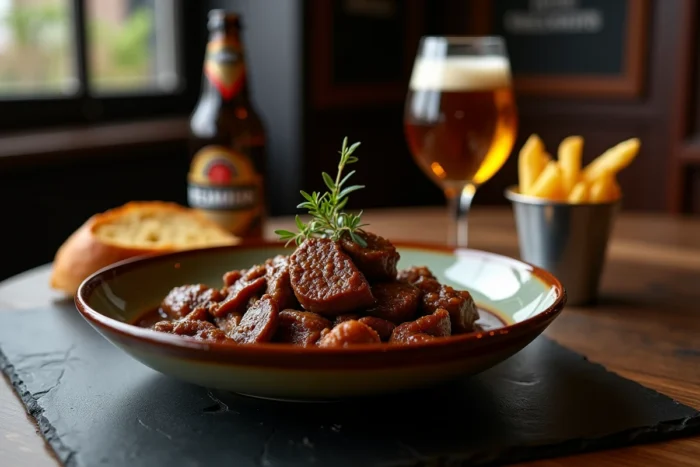
Fries remain the canonical accompaniment. Their role goes beyond garnish: dipped in the sauce, they absorb the cooking juices and complete the dish. Sautéed potatoes or mashed potatoes also work, but they alter the tasting experience.
Preparing the carbonnade the day before significantly improves the result. As with most stewed dishes, resting in the cold allows the flavors to meld. A gentle reheating in the oven the next day is enough to regain the optimal texture, often better than on the same day.